The Trees That Hold the Tetons Together
Following Jackson Hole Mountain Resort’s recent certification as a Whitebark Pine Friendly Ski Area, Dusty Perrin reflects on the people, partnerships, and longstanding conservation work helping protect one of the Tetons’ most important alpine species: whitebark pine.
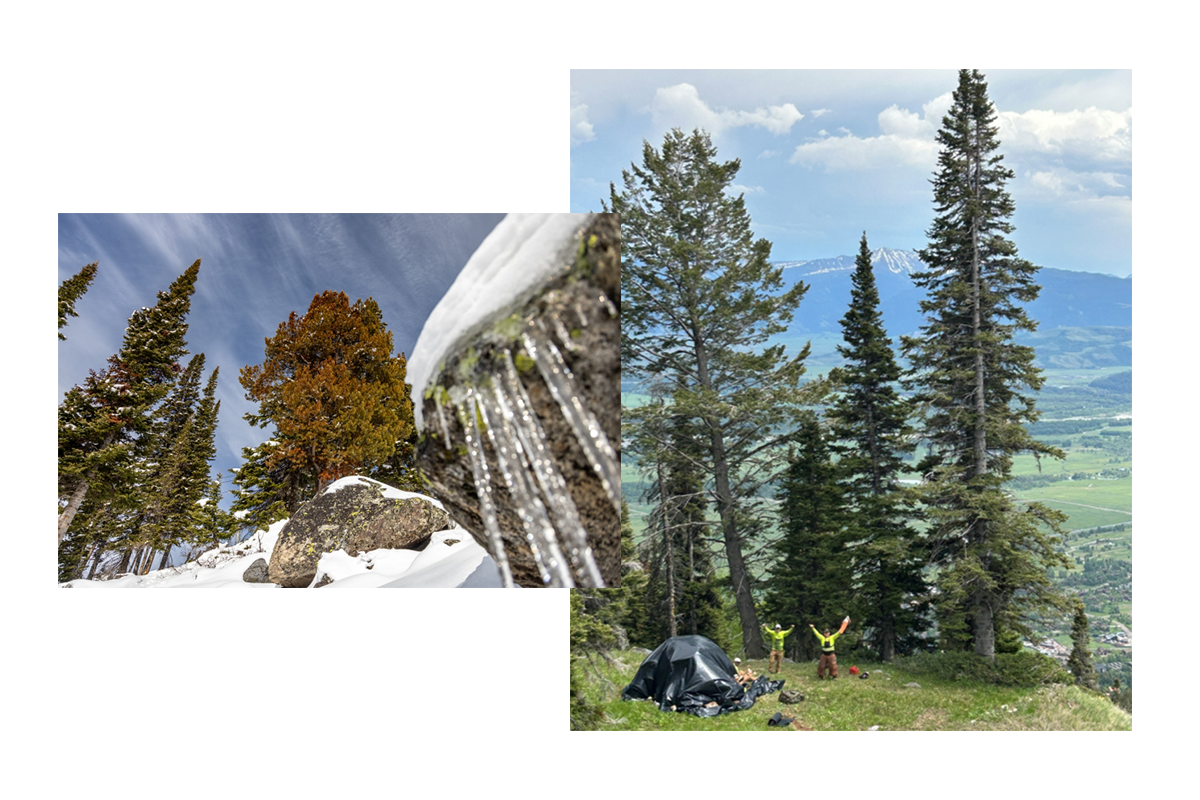
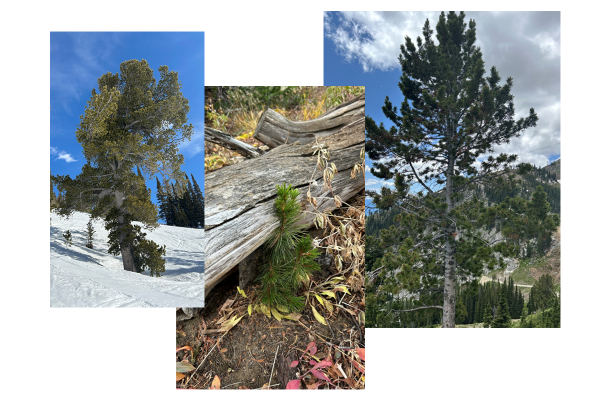
I feel so fortunate to have lived so much of my life in and around Jackson Hole. One thing that makes this place so special is there is always more to learn and explore here. I first really started learning about whitebark pine in the summer of 2020, and ever since then these trees that I have always been around have been impossible to ignore. Trees that used to just blend into the mountain forests suddenly started to stand out everywhere I looked. They became more than a cool looking tree. The beautiful natural architecture of whitebark pine is still one of my favorite things about them. The swooping shape of large, mature trees and their unique growth patterns lend each tree an individual character that is hard to miss.
Whitebark pine is a keystone species of JHMR’s high elevation ecosystem, meaning many other species depend on it for survival. In the exposed alpine environment, whitebark pines provide rare shelter for both wildlife and people, whether it’s a grizzly bear searching for food or a skier ducking out of a storm. Their pine nuts are a key food source for many birds and mammals including Clark’s nutcrackers and grizzly bears. Whitebark pine is also a foundational species meaning they are often the first plant life to take hold in rugged, alpine environments. Their root systems stabilize fragile alpine soils, reducing erosion and helping other species establish themselves. In such a harsh environment these trees grow very slowly, and often live to be hundreds or over a thousand years old. It is hard not to admire the resilience of whitebark pine when you see their silhouettes rising above an exposed alpine ridgeline.
Whitebark pine is a five-needle pine meaning each and every needle cluster grows in a group of five needles. This allows you to identify them even when they are tiny seedlings just sprouting out of the ground or small saplings that can look similar to other young conifers. In the Tetons we also have lodgepole pines which are a two-needle pine and limber pines which are another five-needle pine. These dense five needle clusters create thick canopies that help snow drift deeper in winter and shade the snowpack as it melts in spring.

The branches of whitebarks grow up and outward which gives their canopy more of a rounded, bushy appearance compared to the pointed nature of other conifers. This is an evolutionary growth pattern to present more cones to Clark’s nutcrackers as whitebark pines mature into cone producing adults (usually starting around 80 years old). Whitebarks rely on the nutcrackers to symbiotically disperse and plant their seeds, as the birds cache seeds in the soil to be consumed later. The seed caches that the birds forget about and the bears don’t find eventually grow into new whitebarks, often in clusters of trees.
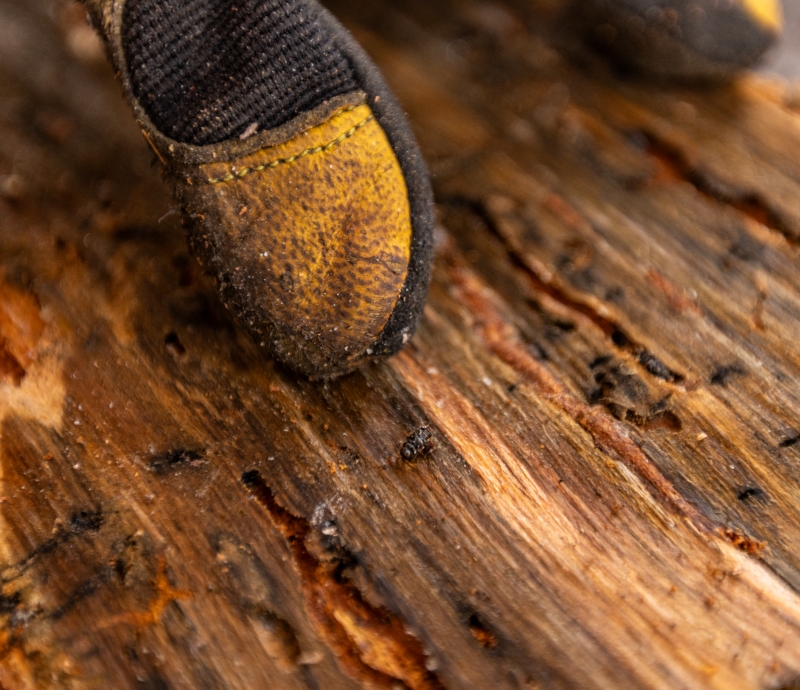
The more I learned about whitebark pine, the more impossible it became to ignore the threats facing them. . White pine blister rust is a non-native fungus introduced to North America roughly a century ago that slowly spreads from a tree’s needles into its branches and trunk . Once the fungus reaches the main trunk of a tree it can fully cut off the tree’s nutrient flow and kill the tree. Mountain pine beetle is a native beetle species, but frequent beetle epidemics have recently decimated whitebark stands across the Tetons. The beetles burrow in under the bark and lay larvae that then rapidly cut off the tree’s nutrient flow and kill the tree. When beetles are swarming at epidemic levels they will kill mature trees in a single year cycle. Continued climate change towards longer summers and warmer winters will intensify the spread of the fungus and the frequency of beetle epidemics. The combined threats of these factors led to the U.S. Fish and Wildlife Service classifying whitebark pine as a threatened species under the Endangered Species Act in December of 2022.

The start of my education on whitebark pine was concurrently sparked by the start of another mountain pine beetle epidemic. I’ll never forget the day I first met Nancy Bockino (lead whitebark pine ecologist for the Northern Rockies Conservation Cooperative (NRCC)) in August of 2020 to help her apply 300 verbenone pouches at JHMR. Verbenone pouches are the white packets you will see stapled to the trees. These pouches release the same pheromone that the beetles do when a tree is completely full of beetles. By hanging pouches on healthy trees, we trick the beetles into moving along, protecting healthy trees and spreading the beetles out so they are less effective at mass attacking trees. That afternoon I drove Nancy to key upper mountain areas of JHMR stapling verbenone to trees and getting an in-depth crash course on all things whitebark pine. The combination of easy roadside access and Nancy’s decades of expertise made it so tasks that would normally take a full day were accomplished in a few hours. These are still the two resources that JHMR makes use of the most for whitebark pine conservation: efficient access to whitebark habitat and a wealth of knowledge from our partners.
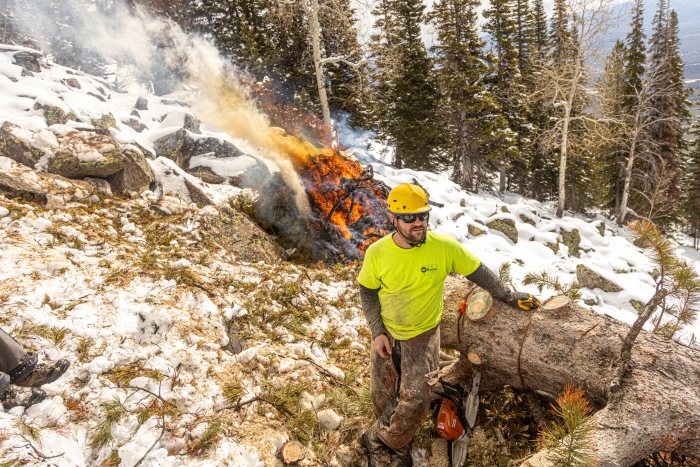
In that afternoon with Nancy, not only did we protect hundreds of healthy whitebarks, we found some unhealthy trees. We found several brood trees, which are trees that have been fully infested by mountain pine beetles. The beetles burrow in under the tree’s bark and lay larvae that cut off the flow of nutrients through the tree. Even a giant, healthy tree will be killed in a matter of months when mass attacked by mountain pine beetles. In October of 2020, JHMR had Forest Service entomologists out of the Regional Forest Health Protection office assess the prevalence of pine beetles on Rendezvous Mountain. We drove all across the mountain finding even more brood trees and I got to learn a lot more about mountain pine beetles. The Forest entomologists were worried that this might be the beginning of another beetle epidemic. In order to try and keep the beetle population in check, they recommended one of the best things that JHMR can do is to cut down and burn all of the beetle infested trees we find to kill the beetles and protect the remaining cone bearing whitebark pines.
Since 2020 we have been developing a workflow to try and remove as many brood trees as we can at JHMR. This starts with correctly identifying infested trees during the winter while the beetle larvae are still in the trees. Every brood tree is flagged, mapped, and documented. Having identified brood trees, we then must receive approval for removing them from the U.S. Fish and Wildlife Service due whitebark pine being a threatened species. The Bridger Teton National Forest (BTNF) has been an incredible partner helping with this approval process and encouraging our program. Then the real work can begin. After the ski season closes, our sawyers use snowcats to get close to the brood trees. From there, crews often post-hole through deep snow carrying chainsaws to reach the trees. The identified brood trees are felled and bucked up. All of the tree is then manually stacked into a pile over snow and burned, killing as many beetles as possible. For brood trees that can’t safely be felled, we have started stripping their bark following proven techniques that the NRCC uses in Grand Teton National Park. In the last 6 years we have treated (cut & burned or de-barked) over 350 brood trees at JHMR, and almost 225 of those have been in the last two years. All of that work is starting to show. Hiking or skiing around JHMR compared to surrounding areas of the Tetons, the bright red whitebarks recently killed by mountain pine beetles are much harder to find.

Removing brood trees is the most specialized whitebark pine conservation work we do at JHMR, but there is a lot more going on too. JHMR continues to partner with the NRCC and BTNF by ordering hundreds of verbenone pouches every year to keep protecting healthy whitebarks. The summer of 2022 saw a big cone production season and I got to see the NRCC crew collect cones from special mature trees at JHMR. These trees are special because they are genetically resistant to white pine blister rust, meaning the next generation of trees grown from them will be much more resilient. The pine cones are sent to a forest nursery for their seeds to be grown into healthy seedlings. After two years of planning with the BTNF and NRCC for where to plant them, 750 of these seedlings came back to JHMR in October 2025. With a great team of NRCC and JHMR workers, we planted all 750 seedlings near the bottom of Rendezvous Bowl. We have more seedling plantings planned this fall and next fall as well!
Being so involved in our whitebark pine conservation work has been one of the most gratifying aspects of my job at JHMR. In the six years I have been involved, it has been incredible to see all the different work that goes into helping these trees. And it has also been humbling to learn that this is just the current phase of long standing work. For almost two decades JHMR has been working with Nancy at the NRCC and the BTNF on conservation work. Two summers ago I found seedling planting sites from the early 2010’s.

With that history of field work and increasing efforts recently, getting certified as a whitebark pine friendly ski area by the Whitebark Pine Ecosystem Foundation (WPEF) became a new goal. This certification is wide ranging in that it not only requires field conservation work, but also education of guests and employees. In the last two years we have redesigned the summer signage from the base area to the top of Rendezvous Mountain and along our hiking trails including lots of information on whitebark pine. We have had multiple video productions with For the Love of Whitebark and hosted the field filming of the National Museum of Wildlife Art’s newest Bisoncast video on whitebark pine. I have done whitebark trainings for our mountain projects, ski patrol, and backcountry guides with more trainings planned. Achieving this certification reflects years of conservation work, collaboration, and education from many people and partners. For JHMR, the certification also represents a broader commitment to responsibly operating within and helping protect the alpine environment that defines this place.
Whitebark pine conservation is long-term work measured across generations, not seasons. The seedlings being planted today may take decades to fully shape the skyline again, but protecting the mature trees already standing across the Tetons is just as important. Hopefully more people who visit Jackson Hole leave not only appreciating these incredible landscapes, but also understanding the role species like whitebark pine play in keeping them resilient for the future.
From The Blog
Trails from the Tram: Granite Canyon
An afternoon jaunt down Granite Canyon was a great example of the amazing access the Tram provides to Grand Teton National Park and Bridger-Teton National Forest.
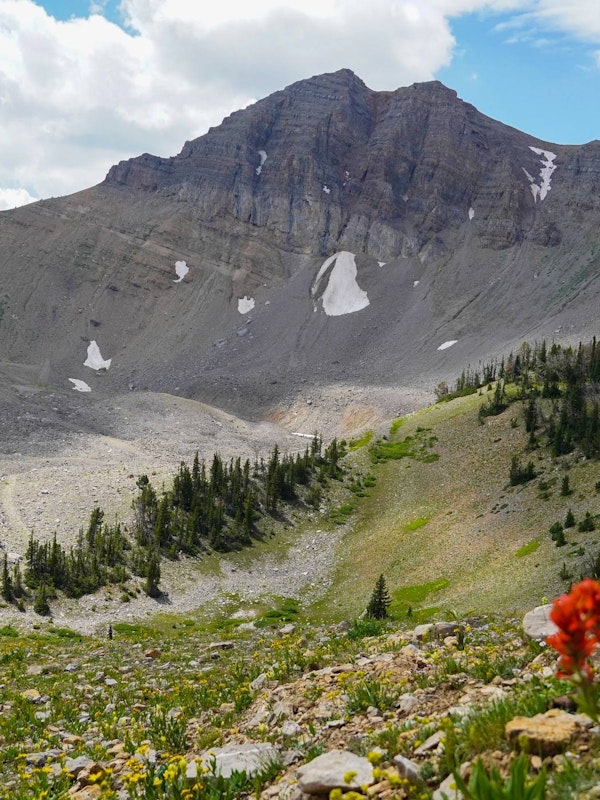
Top 5 Hikes in Jackson Hole
As a resort nestled within Bridger-Teton National Forest, right on the border of Grand Teton National Park, we are blessed with a beautiful alpine environment. This rugged mountain terrain provides stunning vistas and a wide range of trails for hikers of all abilities.
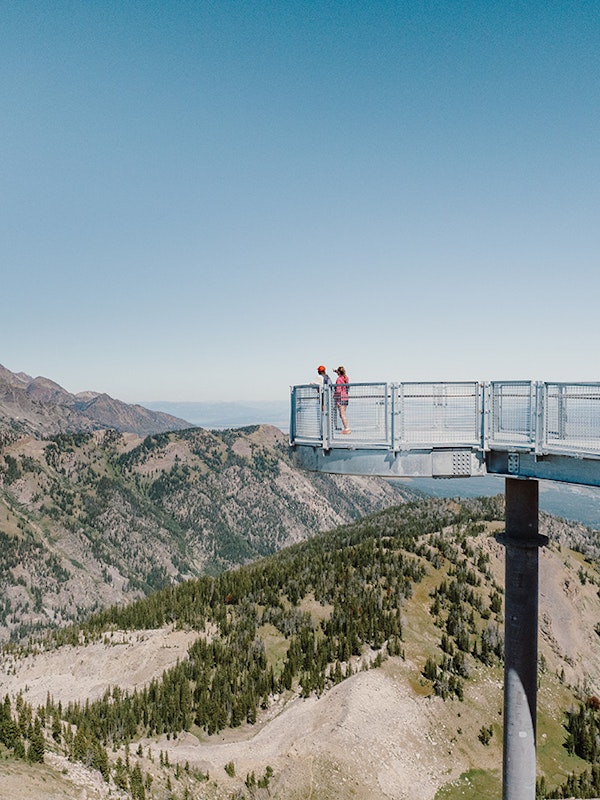
Grand Teton Skywalk
Soak in the views on the all-new Grand Teton Skywalk viewing platform at the top of Rendezvous Mountain! The Grand Teton Skywalk is accessible via a sightseeing ticket on the Aerial Tram.
Blank Canvas: The Early Tram Experience
Early access. Skip the lines. Own the mountain.
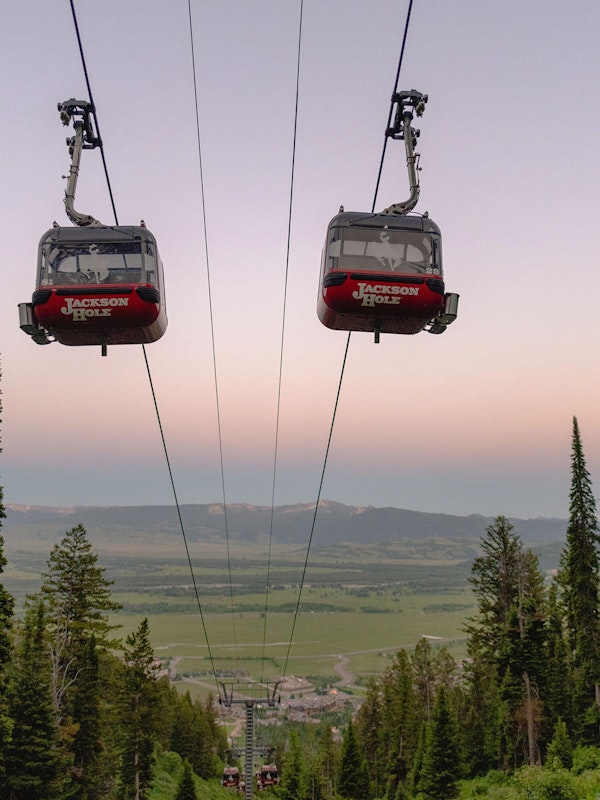
A Guide to Summer in Jackson Hole
Summer in the Tetons: verdant, emerald slopes, majestic world-famous mountains, active wildlife, abundant blooming wildflowers, and two national parks, there are few places that make for a better summer adventure than Jackson Hole, Wyoming.
With so many possibilities it's hard to know how to best spend your time in the Tetons.
This six-day itinerary features the very best our home has to offer, making sure you won't miss out on any epic adventures or stunning scenery.