



Jackson Hole, Wyoming
Welcome to
The Big One
Why is Jackson Hole “The Big One”?
It’s the Wild West.
It’s the mountain steeped in lore.
It’s the deeply personal feeling we all share.
Read the reasons below. Find yours at 10,450 feet.

Before we ever opened, this mountain earned a nickname.
Nothing about the plan was modest: only the second skier tram in North America, with a rise nearly double that of the first. 4,139 continuous vertical feet. Unmatched then. Unmatched now.
In October 1965, two months before the lifts first turned, Skiing magazine said Jackson Hole had to be skied to be believed. The attention drew adventure seekers west, and it didn’t take long for them to give the mountain a name that fit:
The Big One.
By the 70s, “Ski The Big One” had become more than a description. It was part of our identity, appearing alongside the Vertical Foot Club, where skiers earned pins and patches as they stacked vert. But the moniker is more than a measurement. It’s deep snow, wild terrain, iconic views, and the kind of days you remember for the rest of your life.
Decades later, the name has endured because the feeling has. Keep exploring and you’ll find plenty of reasons why:
We’ve always been The Big One.
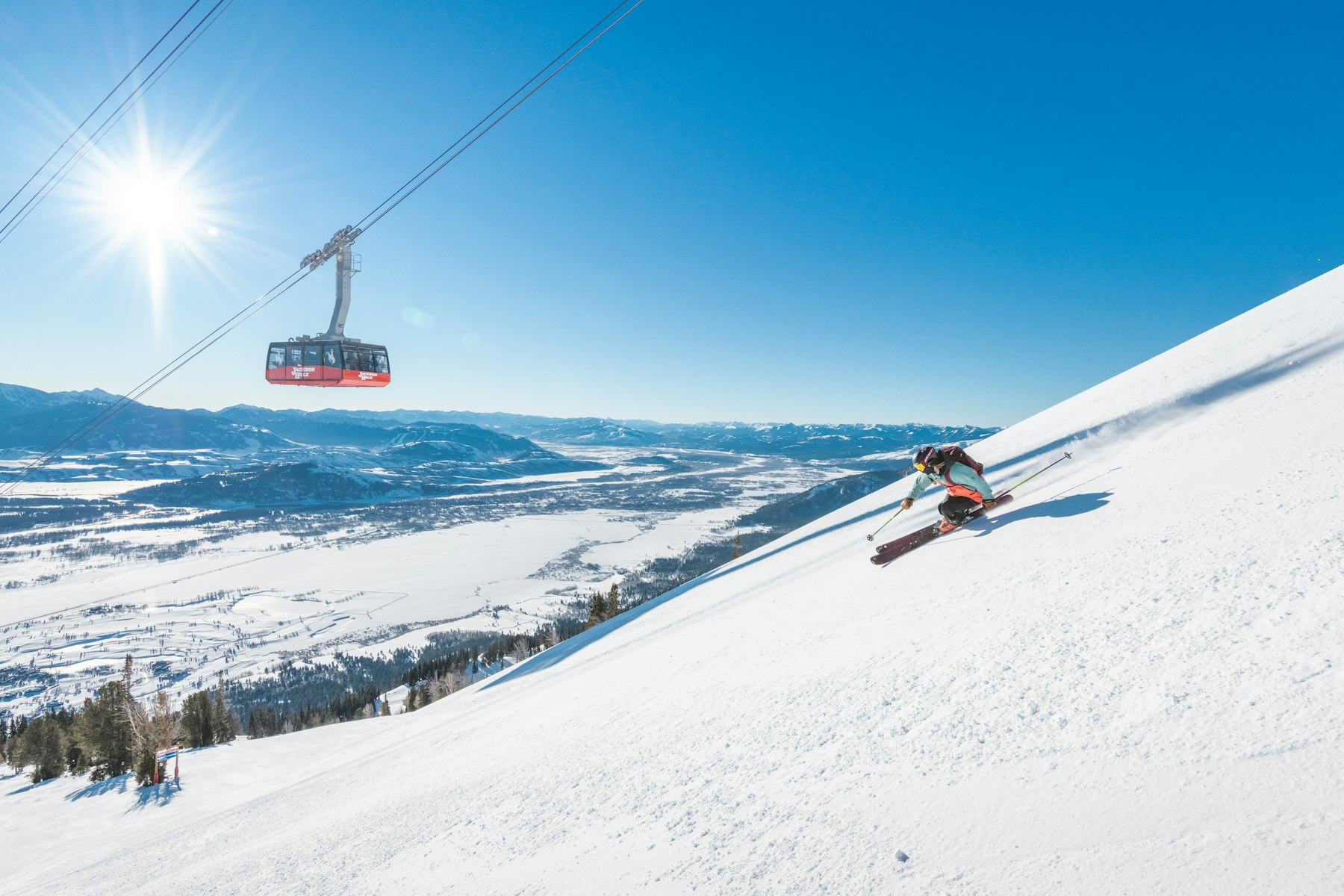


A couloir with a household name, two national parks as neighbors, snow that's better measured in feet than inches, those famous Tram doors that open into another universe.
There are countless reasons people call us The Big One. But anyone who’s been here knows it's about the one feeling it all adds up to.
It's being somewhere truly wild. Somewhere that makes you feel impossibly small. A shift in your perspective, a new relationship with scale. A place where the spirit of the West is still very much alive, in the people, the culture, and the landscape. A landscape vast enough to quiet everything else. Stillness. But then the rush. You’re utterly alive. It’s the anticipation when the snow simply won't stop falling. Pure adrenaline. Skiing and riding in mountains untamed.
You'll know it when you feel it.
Everyone Has Their Reason

Family Tradition

Corbet's Couloir

The Tram
4,139 vertical feet. That's taller than three Empire State Buildings.
458 inches of average annual snowfall. That's equivalent to 3+ inches of snow per day, every day, for the entirety of a 137-day ski season. Of course we prefer 12 inches a day. When you're choosing where to ski and ride, it's hard to find more reliable snow than here at Jackson Hole.
Topping out at 10,450 feet above sea level, you’ll find staggering 360-degree views of the Tetons, Jackson Hole Valley and surrounding mountain ranges. Up here, the Grand Teton feels close enough to touch. It’s said the altitude works a little magic on the batter used for our Top of The World Waffles. We’re not here to argue.
2,500 acres of inbounds terrain. And a backcountry gate system that unlocks more than 3,000 acres of lift-accessed backcountry, for a total of 5,500+ skiable acres. Consider a professional Jackson Hole mountain guide to help you discover the best terrain, inbounds and out, for whatever conditions the day brings.
Bordered by 8.96 million acres of public land between the Yellowstone and Grand Teton National Parks, and the Bridger Teton and Caribou-Targhee National Forests. There are only six people per square mile in Wyoming, and it really shows on our mountain. Fewer crowds. More carving.


OnTheSnow Calls It the Easiest Ski Access in the Nation
As you land in Grand Teton National Park, you’ll spot the resort outside your window. From there, it’s only 30 minutes to Teton Village. Nonstop flights from 14 major US cities make it easy to touch down in the morning and be on the chairlift up in the afternoon.